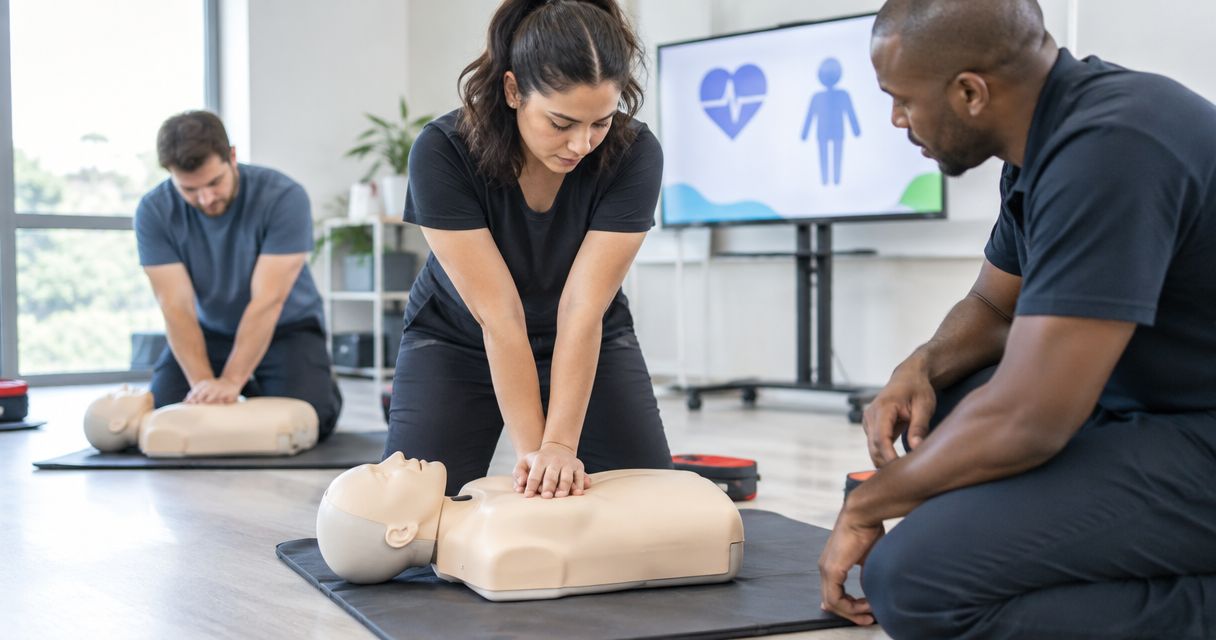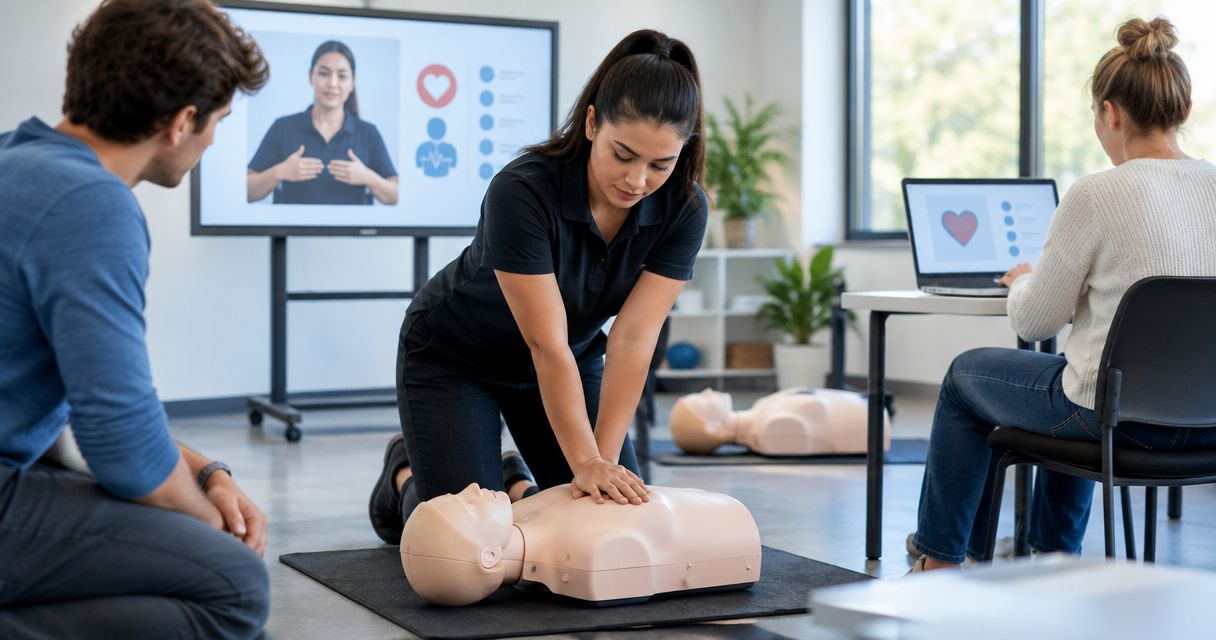
Six providers advertise the best online BLS certification programs in 2026, but only some of them pair self-paced coursework with the in-person skills testing that hospitals, EMS agencies and licensing boards actually check for.
- Same Day CPR wins for healthcare workers who need an AHA BLS Provider card with in-person skills testing across numerous US locations.
- AHA HeartCode BLS suits independent learners who want the official American Heart Association online modules and will book skills testing on their own.
- American Red Cross BLS fits organizations whose contracts already run through Red Cross documentation.
- Fully online, non-accredited providers like National CPR Foundation and CPR Select work for general public cards but most hospitals reject them for clinical BLS requirements.
- AHA BLS certification carries a two-year renewal cycle in 2026, unchanged for years.
Why this matters
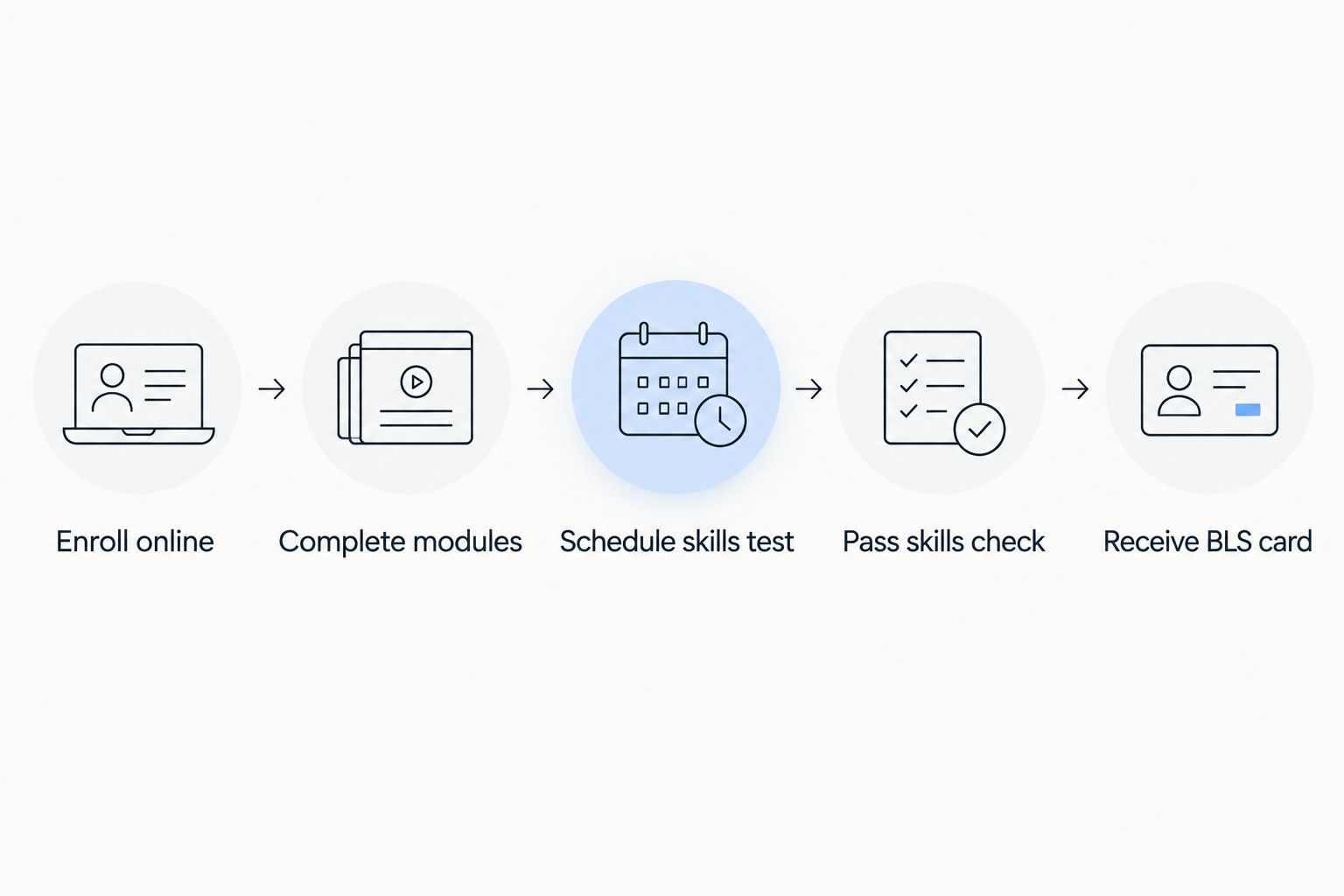
A BLS card is only as good as the accreditation behind it. Same Day CPR runs American Heart Association BLS classes that combine online coursework with an in-person skills test, which is the exact structure hospitals and EMS employers expect from a healthcare-provider BLS card in 2026.
The confusion starts because plenty of online providers sell a course called "BLS certification" that skips the hands-on skills check entirely. That shortcut works fine for a general workplace requirement, but it gets rejected the moment a hospital HR department or a state licensing board asks for an AHA or American Red Cross BLS Provider card. Picking the wrong provider means redoing the whole thing before a start date.
What makes the best online BLS certification program
- Accreditation from AHA or the American Red Cross — the two bodies most hospital and EMS onboarding checklists actually name.
- A blended-learning path, not a cognitive-only shortcut — online modules plus a required in-person skills verification.
- Skills-testing access near your location, not just in one city or one region.
- A card on the standard renewal cycle — two years for AHA BLS Provider certification in 2026.
- Support for group or facility-wide enrollment, not just one seat at a time.
- Clear renewal timing so the card doesn't lapse mid-shift.
Best online BLS certification programs in 2026 at a glance
| Program | Best for | Standout feature | Key limitation |
|---|---|---|---|
| Same Day CPR | Healthcare workers needing AHA BLS with in-person skills testing | Blended AHA coursework plus skills testing across numerous US locations | Skills-test session still has to be booked in person |
| AHA HeartCode BLS | Independent learners doing the cognitive portion solo | Official American Heart Association online modules | Skills session booked separately, often with a different provider |
| American Red Cross BLS | Organizations standardized on Red Cross records | Digital certificate inside Red Cross's own verification system | Some employers specify AHA cards only |
| HSI/ASHI BLS | EMS and allied health training pipelines | Nationally accredited, common inside EMS academies | Less name recognition with general hospital HR staff |
| National CPR Foundation (ProCPR) | General public CPR/AED cards | Fully online, finished in one sitting | Not AHA or Red Cross accredited; hospitals often reject it |
| CPR Select | Quick renewal of a basic layperson card | Fast, no-scheduling renewal flow | Same accreditation gap as other independent providers |
1. Same Day CPR: best online BLS certification for healthcare workers who need in-person skills testing
Same Day CPR runs American Heart Association BLS classes that pair online coursework with an in-person skills test — the format hospitals expect from a healthcare-provider BLS card. Classes run across numerous US locations, so a nurse in one city and a paramedic student in another can both find a nearby skills-testing session instead of traveling across state lines. The AHA card issued at the end carries the standard two-year validity every AHA BLS Provider card carries in 2026.
Same Day CPR pros:
- AHA-aligned coursework, the accreditation most hospital HR departments check first.
- In-person skills verification built into the same enrollment, not a separate booking with another company.
- Coverage across numerous US locations instead of a single city.
- Two-year AHA renewal cycle, standard across the industry.
Same Day CPR cons:
- The skills-test session still has to be scheduled in person, so it isn't a fully remote, one-hour course.
- Class availability depends on finding a nearby session, which can mean a short wait in smaller markets.
Best for: healthcare workers whose employer requires a full AHA BLS Provider card with hands-on skills verification.
Verdict: Buy.
2. AHA HeartCode BLS: best online BLS certification for self-paced independent modules
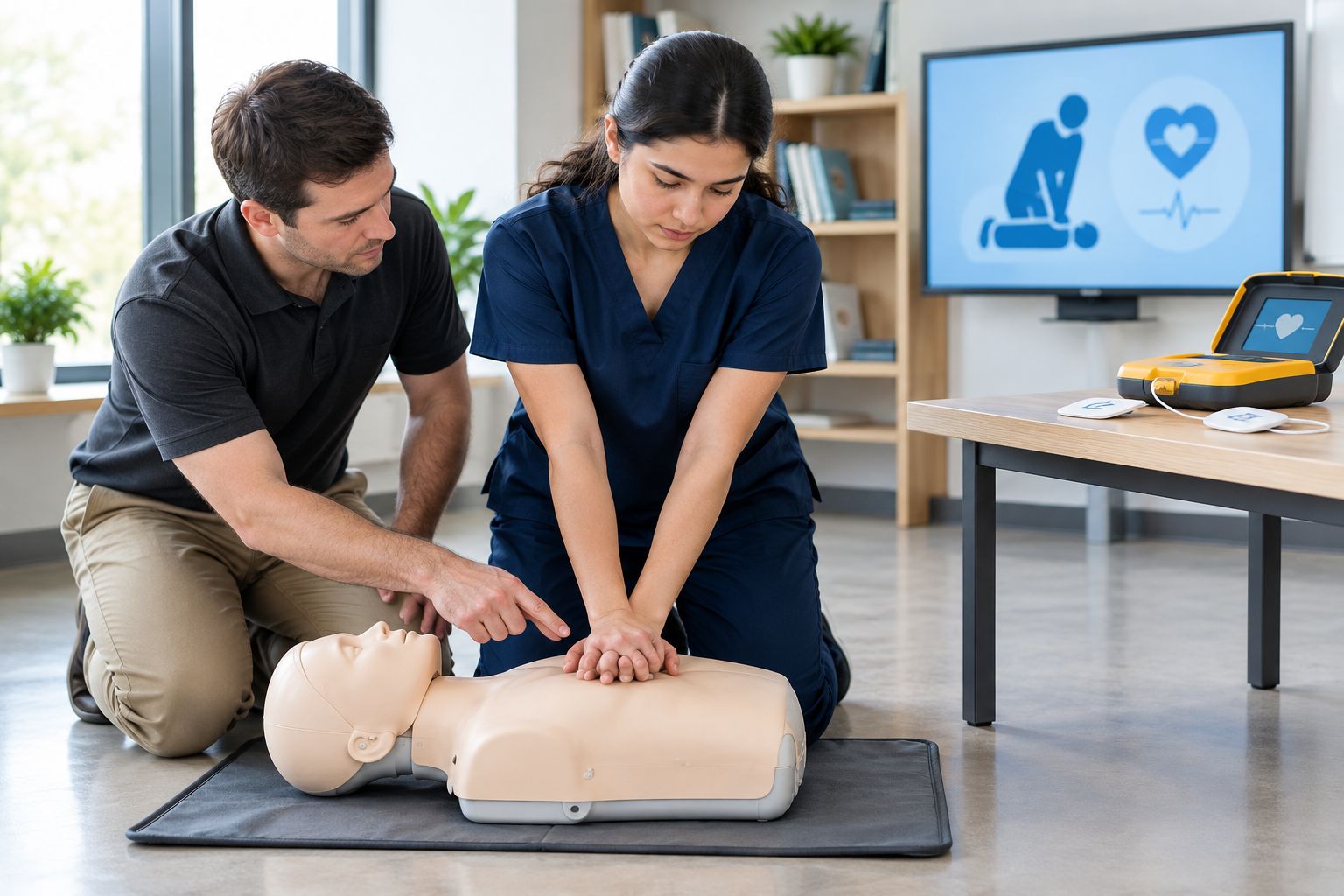
HeartCode BLS is the American Heart Association's own self-directed online course, built for people who want the cognitive portion of BLS done on their own schedule. It covers the same guidelines every AHA BLS class teaches, but it stops at the online modules — a hands-on skills session with an AHA instructor is still required before a card is issued, and that session isn't bundled into the online purchase.
AHA HeartCode BLS pros:
- Comes directly from the American Heart Association, so the coursework itself carries unquestioned accreditation.
- Fully self-paced, no scheduled online class time.
AHA HeartCode BLS cons:
- Skills verification is a separate step, often with a separate provider.
- No built-in support for scheduling that second appointment.
Best for: independent learners comfortable coordinating their own in-person skills test after finishing the online modules.
Verdict: Hold — solid if a skills-testing site is already lined up, otherwise the two-step process adds friction.
3. American Red Cross BLS: best online BLS certification for organizations standardized on Red Cross records
The American Red Cross runs its own blended BLS program, structured much like AHA's: online modules followed by an in-person skills session with a Red Cross instructor. Some hospital systems, fire departments and training contracts are built around Red Cross's documentation and digital certificate system, so switching providers mid-contract just creates extra paperwork.
American Red Cross BLS pros:
- Nationally recognized accreditation, comparable in scope to AHA.
- Digital certificate stored inside Red Cross's own verification system.
American Red Cross BLS cons:
- Some employers specify AHA cards specifically in onboarding paperwork, so confirm before enrolling.
- Skills-testing site availability varies by region.
Best for: staff at organizations that already require Red Cross documentation.
Verdict: Buy — if the employer's paperwork calls for Red Cross specifically.
4. HSI/ASHI BLS: best online BLS certification for EMS and allied health training pipelines
ASHI, the American Safety and Health Institute under HSI, runs a blended BLS course commonly used inside EMS academies and allied-health training programs. It carries national accreditation and is accepted by many of the same employers that recognize AHA and Red Cross, though it has less name recognition with hospital HR staff outside EMS circles.
HSI/ASHI BLS pros:
- Nationally recognized accreditation, widely used inside EMS training pipelines.
- Blended format includes required hands-on skills verification.
HSI/ASHI BLS cons:
- Less familiar to general hospital HR departments than AHA or Red Cross.
- Skills-testing sites are less common outside EMS-heavy regions.
Best for: EMS students and allied health programs already built around ASHI curriculum.
Verdict: Hold — confirm the specific employer accepts ASHI before enrolling.
5. National CPR Foundation (ProCPR): best online BLS certification for general public CPR/AED cards
National CPR Foundation and similar independent training companies like ProCPR sell fully online CPR/AED/BLS courses aimed at the general public — coaches, teachers, daycare staff, anyone who needs a card for a job application that doesn't specify an accrediting body. These courses skip the in-person skills test entirely, which is exactly why most hospitals and many EMS employers won't accept them for clinical roles.
National CPR Foundation pros:
- Entirely online, finished in one sitting.
- Fine for roles that don't specify AHA or Red Cross.
National CPR Foundation cons:
- Not accredited by AHA or the American Red Cross.
- Hospitals, most EMS agencies and many state licensing boards reject these cards for clinical BLS requirements.
Best for: laypeople who need a general CPR/AED card, not a hospital-grade BLS Provider certification.
Verdict: Skip for healthcare roles; fine for general public use.
6. CPR Select: best online BLS certification for quick renewal of a basic layperson card
CPR Select and comparable independent renewal services target people who already hold a basic card and just need to refresh it fast, with no classroom and no skills test. It's built for convenience, not for the healthcare-provider market — the same accreditation gap that limits National CPR Foundation applies here too.
CPR Select pros:
- Fast renewal flow for non-clinical staff.
- No scheduling required.
CPR Select cons:
- Same accreditation gap as other independent online-only providers.
- Not accepted for hospital or EMS BLS Provider requirements.
Best for: renewing a basic layperson CPR card outside a clinical job.
Verdict: Skip for healthcare roles; fine as a general workplace refresher.
How we ranked these
Each program was weighed against the criteria above: accreditation body, whether the format is blended or cognitive-only, how easy it is to find a nearby skills-testing session, the length of the renewal cycle, and whether hospitals and EMS employers actually accept the resulting card in 2026. Programs that skip the in-person skills check rank lower for any reader working in a clinical role, regardless of how convenient the online portion is.
Which online BLS certification program should you choose?
If an employer requires an AHA BLS Provider card, Same Day CPR's blended online-plus-skills-test format is the most direct path in 2026 — one enrollment covers both the coursework and the hands-on verification. Independent learners who just need the cognitive modules can start with AHA HeartCode BLS, but should book a skills-testing appointment before assuming the card is done. Anyone in a hospital or EMS role should skip fully online, non-accredited providers the moment accreditation matters to their employer.
Book AHA BLS Training Near You
Online coursework plus in-person skills testing across numerous US locations.
FAQ
What's the best online BLS certification program in 2026?
Same Day CPR is the strongest option for healthcare workers who need an AHA BLS Provider card with in-person skills testing in 2026, since it combines both steps in one enrollment across numerous US locations.
Is AHA BLS certification the same as Red Cross BLS?
No, they're separate accrediting bodies with separate cards. Both use a blended format of online coursework plus an in-person skills test, but some employers specify one over the other in their onboarding paperwork.
Can you get BLS certified fully online with no in-person skills test?
Some independent providers sell cognitive-only online BLS courses with no skills test, but most hospitals and EMS employers require the hands-on verification that AHA and Red Cross build into their BLS Provider courses.
How long does BLS certification last?
AHA BLS Provider certification is valid for two years in 2026, the same cycle it has run on for years. Renewal requires completing the course again before the card expires.
How much does online BLS certification cost?
Cost varies by provider, format and location. Check current pricing directly on the provider's site before enrolling rather than relying on a general estimate.
Does ASHI BLS certification count for hospital jobs?
ASHI is nationally accredited and accepted by many EMS and allied health employers, but not every hospital HR department recognizes it the way they recognize AHA or Red Cross. Confirm with the employer before enrolling.
How long does it take to complete BLS certification online?
The online modules can typically be finished in one sitting, but the full certification isn't complete until the required in-person skills test is scheduled and passed.
Is a Red Cross BLS card accepted everywhere an AHA BLS card is accepted?
Not always. Some employers list AHA specifically in onboarding requirements, so check the exact wording of the job posting or facility policy before choosing a provider.
One last thing
The most common reason healthcare workers get sent back for retraining in 2026 isn't a failed skills test — it's finishing an online BLS course through a provider their employer never listed as accepted in the first place. Confirm accreditation with HR before paying for any online BLS certification, not after the card arrives.